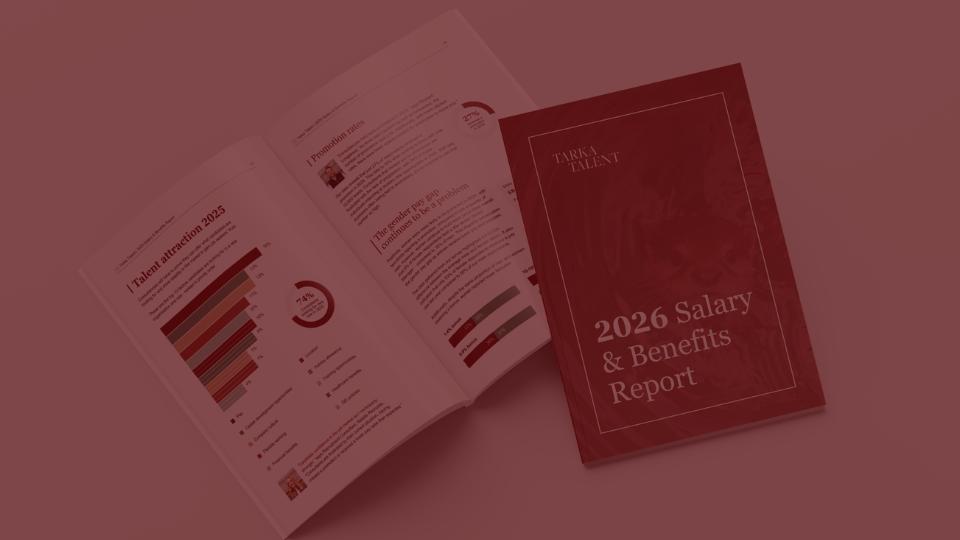
In a consulting market shaped by economic uncertainty, technological disruption, and shifting workforce expectations, understanding how compensation and benefits are changing has never been more important. The Tarka Talent 2026 Salary & Benefits Report offers a detailed and data-led perspective on these changes, combining insights from nearly 500 consultants with real-world conversations across the industry.
What appears is a clear and compelling narrative: while the consulting sector is recovering and entering a new phase of growth, talent competition is intensifying. Firms are no longer competing solely on salary, but on the total value they offer employees, ranging from career development and flexibility to culture and long-term progression.
Below, we break down the most important insights shaping consulting hiring, compensation, and retention in 2026.
A Market in Recovery, But More Competitive Than Ever
Following a challenging period marked by hiring freezes, redundancies, and reduced growth, the consulting market is now showing clear signs of recovery. According to the report, consultancy firms experienced renewed demand throughout 2025, particularly in the latter half of the year, and this momentum is expected to continue into 2026 and beyond.
This recovery is not just circumstantial. Industry projections indicate growth of 5.7% in 2026 and 7.4% in 2027, signalling a return to confidence across the sector.
At the same time, hiring intent has risen significantly, with 79% of consultancy firms planning to recruit in 2026.
However, this renewed activity brings with it a new challenge. As demand increases, so too does competition for experienced professionals. Firms are no longer simply hiring to grow; they are hiring to secure a competitive edge, particularly in areas such as digital transformation, AI, and strategic consulting.
Salary Still Leads, but Expectations Are Changing
Despite the growing emphasis on culture and flexibility, salary remains the single most influential factor in career decisions. The report highlights that 69% of consultants actively seeking new roles in 2026 are doing so to secure higher pay, reinforcing the central role of compensation in attracting talent.
This is further supported by the finding that 29% of consultants are specifically job hunting for salary increases, highlighting how closely career mobility is tied to financial progression.
“Salary is the most important consideration for job seekers in 2026,” explains Richard Longstreet, Founder of Tarka Talent, highlighting the central role compensation continues to play in an increasingly competitive talent market.
Yet, while salary remains dominant, expectations are becoming more nuanced. Candidates are increasingly evaluating roles through a broader lens, considering how compensation aligns with career growth, work-life balance, and long-term value. This shift is forcing employers to think beyond base pay and adopt a more holistic approach to reward.
Rising Salaries Reflect a Shifting Power Dynamic
Encouragingly for candidates, salaries are beginning to rise again after a period of stagnation. Nearly half of consultants reported receiving a pay increase in 2025, with the average uplift sitting at around 6%.
While this signals a positive trend, it also reflects a broader shift in the balance of power within the talent market. As hiring demand increases, organisations are being forced to compete more aggressively to attract and retain top performers. The report anticipates that this competition will intensify throughout 2026, particularly in high-demand areas such as data, AI, and strategy consulting.
This means that salary growth is no longer just a reflection of market conditions; it is becoming a strategic tool. Firms that fail to benchmark their compensation effectively risk losing talent to competitors who are willing to offer more competitive packages.
Bonuses and Total Compensation Are Becoming Critical
While base salary remains the primary driver of attraction, the report highlights the growing importance of bonuses and total compensation in retaining talent. In 2025, 71% of consultants received a bonus, making it more common than a pay rise in many cases.
This change reflects a more strategic approach to reward. Bonuses are increasingly being used to incentivise performance and retain employees during key stages of their careers, particularly within the first few years of tenure when attrition risk is highest. As noted in the report, allocating bonuses to top performers has become a common practice to encourage retention.
For employers, this reinforces the importance of viewing compensation as a complete package. Salary alone is no longer enough; it must be supported by meaningful incentives that align with both individual performance and organisational goals.
Career Development Is Closing the Gap with Pay
One of the most significant changes highlighted in the report is the growing importance of career development. While salary continues to lead, 43% of candidates now cite improved career prospects as a key motivator for changing roles.
This is particularly noteworthy when considered alongside promotion data. With only 27% of consultants receiving a promotion in 2025, there is a clear gap between expectation and opportunity.
This gap is driving movement in the market, as professionals seek environments where they can progress more quickly and gain meaningful responsibility. As one insight from the report highlights, career development is no longer a secondary consideration, it is central to how consultants evaluate opportunities.
For employers, this means that clearly defined progression pathways, structured development programmes, and visible growth opportunities are essential components of a competitive offering.
Culture, Flexibility, and Perceived Value Matter More Than Ever
Beyond salary and progression, the report reveals a deeper change in how consultants perceive value. Company culture, working environment, and flexibility are playing an increasingly important role in decision-making, with 31% of candidates actively seeking a better working environment in 2026.
Interestingly, smaller consultancies appear to have an advantage in this area. Employees in smaller firms report higher levels of satisfaction and are more likely to feel fairly rewarded for their work, compared to those in larger organisations, where dissatisfaction is more prevalent.
At the same time, hybrid working remains firmly embedded in the industry, with most consultants spending one to two days per week in the office.
However, there is a growing preference for increased in-person collaboration, suggesting that firms must strike a careful balance between flexibility and connection. Ultimately, these factors contribute to a broader perception of value, one that extends beyond financial reward and shapes both attraction and retention.
Retention Will Define Success in 2026
Perhaps the most striking insight from the report is the scale of potential movement within the consulting industry. With 74% of consultants actively looking for a new role in 2026, retention is set to become one of the most pressing challenges for employers.
This level of mobility reflects a deeper issue. More than a third of consultants report feeling unfairly rewarded for their work, highlighting a disconnect between effort and recognition.
When this perception exists, employees are far more likely to explore new opportunities, particularly in a market where demand for their skills is increasing.
The report makes it clear that attraction and retention are intrinsically linked. The same factors that draw candidates to a role, salary, progression, culture, and flexibility, are the ones that determine whether they stay.
For organisations, this means that retention cannot be treated as a reactive process. It must be built into the foundation of how talent is managed, rewarded, and developed.
Looking Ahead: A More Demanding, More Transparent Talent Market
The Tarka Talent 2026 Salary & Benefits Report paints a picture of a consulting industry that is changing quickly. While growth is returning, so too is competition, not just between firms, but between the expectations of employers and employees.
Consultants are becoming more informed, more selective, and more willing to move in pursuit of better opportunities. At the same time, organisations are being challenged to offer more than ever before, balancing financial reward with meaningful development, strong culture, and flexible working models.
In this environment, success will depend on a firm’s ability to align its offering with what talent truly values. Those who can do so will not only attract the best people but retain them in an increasingly competitive market.
To gain a deeper understanding of salary benchmarks, benefits trends, and hiring insights across the consulting market, download the full report today.